Logistics & Supply Chain
Home / Industries / Logistics & Supply Chain
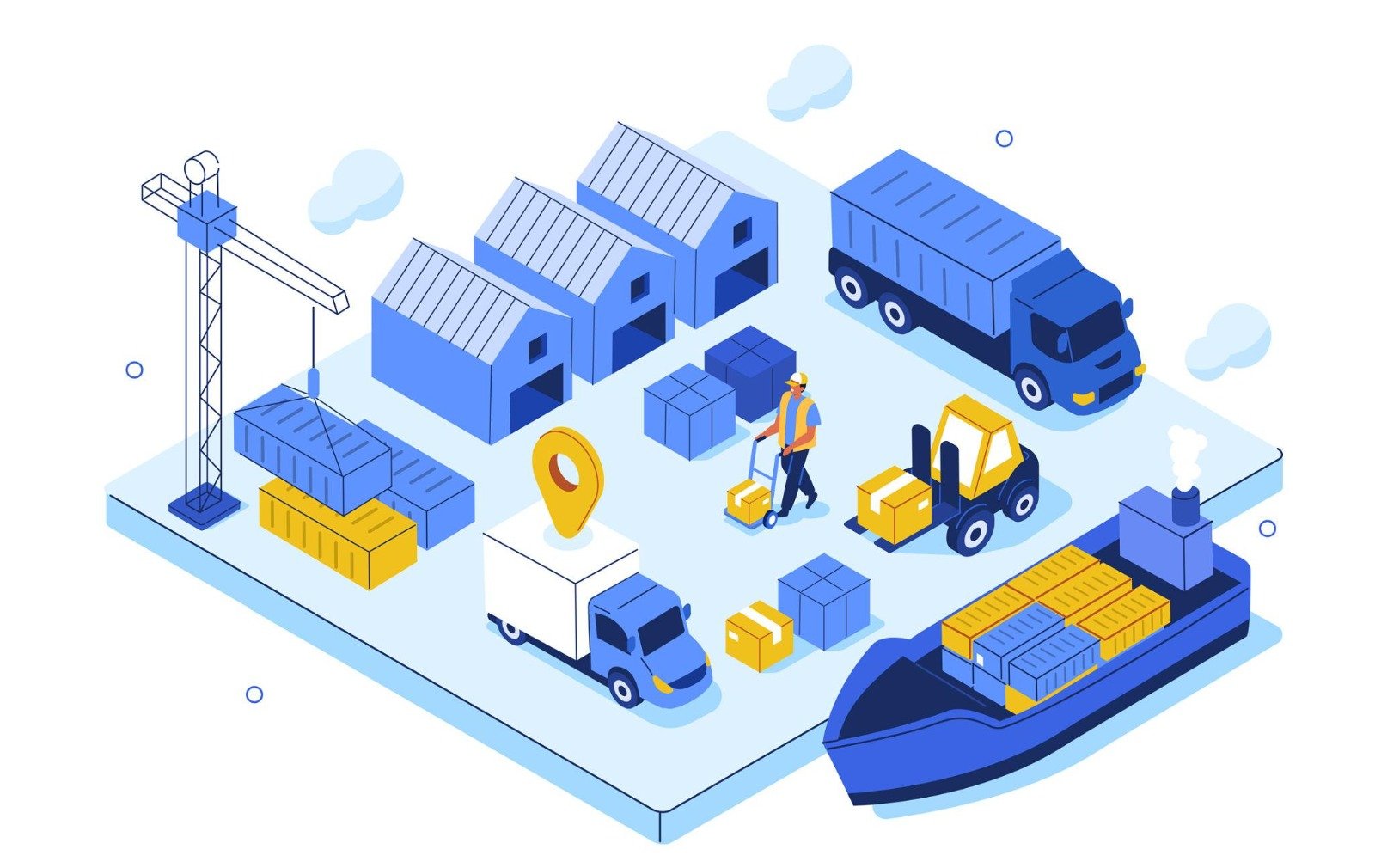
Logistics operators and supply chain organizations face a structural data problem: visibility is fragmented across carriers, WMS platforms, ERPs, and last-mile partners, while the decisions that determine margin procurement timing, routing, safety stock positioning, carrier mix require integrating signals faster than legacy reporting cycles allow.
Node to Network Analytics & Intelligence Services Calibrated to Supply Chain Complexity
Node to Network Analytics & Intelligence Services Calibrated to Supply Chain Complexity

Supply Chain Visibility Platforms
Design and deploy multi-tier visibility layers that consolidate shipment status, carrier event streams, customs milestones, and last-mile handoff signals into a single operational picture eliminating the exception-management blind spots created by carrier portal fragmentation and EDI latency that prevent proactive intervention when disruptions emerge in transit.
Transportation Intelligence
Instrument carrier performance across on-time delivery rate, tender acceptance, lane-level cost variance, and damage frequency enabling dynamic carrier allocation decisions, evidence-based RFP negotiation, and modal shift analysis that reduces freight spend without compromising service level commitments to downstream customers or distribution centres.
ERP & Data Integration
Architect integration layers that unify procurement, order management, warehouse, and finance data across SAP, Oracle, and mid-market ERP environments eliminating the manual reconciliation workflows that introduce latency between operational events and the reporting dashboards that leadership uses to make allocation, replenishment, and carrier mix decisions.
Warehouse & Inventory Analytics
Build analytics layers on top of WMS and RFID data streams to expose slotting efficiency, pick path throughput, dwell time by SKU category, dead stock accumulation patterns, and carrying cost concentration giving warehouse operations leads the granular intelligence to reduce mis-picks, shrink order cycle times, and rationalize storage footprint without capital expenditure on physical infrastructure changes.
AI-Driven Demand Forecasting
Replace statistical averaging models with machine learning pipelines that ingest point-of-sale data, promotional calendars, upstream supplier lead time signals, and external demand indicators — producing SKU-level and node-level forecasts with quantified confidence intervals that reduce both stockout frequency and excess inventory carrying costs across the network.
Workflow Automation & Reporting
Automate the exception-flagging, purchase order generation, carrier milestone alerting, and performance reporting workflows that currently consume analyst and coordinator capacity deploying rule-based and ML-triggered automation that routes the right signal to the right decision-maker at the right time, without requiring manual data extraction and formatting at each reporting cycle.
Platform-agnostic delivery: Our implementations work across the leading WMS, TMS, and ERP stacks including SAP EWM, Manhattan Associates, Blue Yonder, Oracle SCM Cloud, Kinaxis, and custom-built operational data layers and are built to ingest from EDI, API, and flat-file carrier data feeds without requiring platform migrations or rip-and-replace infrastructure changes.
From Brief to Deployed
How We Engage
01
Discovery & Scoping
02
Strategy & Planning
03
Talent Sourcing
01
Screening & Shortlisting
01
Delivery & Onboarding
Four Outcomes That Define
Supply Chain Competitive Leverage
Logistics and supply chain organizations win or lose on the speed of operational insight, the accuracy of forward demand signals, the precision of network cost management, and the responsiveness of fulfilment infrastructure to demand variability. Every engagement we undertake is anchored to one of these four levers — with quantified targets defined at kickoff, not claimed retrospectively.
01
Real-Time Operational Visibility
Unified multi-tier tracking across carrier networks, warehouse nodes, and customs touchpoints eliminates the exception-management lag that forces reactive escalation rather than proactive rerouting — giving logistics and supply chain teams the network-wide situational awareness to intervene before a milestone failure compounds into a customer-facing SLA breach.
02
Demand Signal Precision & Planning Accuracy
AI-driven forecasting models that incorporate sell-through velocity, promotional uplift, lead time variability, and macro demand signals replace the statistical averaging cycles that systematically over-stock slow-moving SKUs while generating stockouts on high-velocity items — shifting procurement and replenishment from backward-looking execution to forward-sensing network orchestration.
03
Freight Cost Optimization & Carrier Leverage
Lane-level cost and performance analytics, modal shift modelling, and tender acceptance benchmarking give procurement teams the evidence base to renegotiate carrier contracts from a position of data credibility — reducing total freight spend through carrier mix optimization, load consolidation intelligence, and the elimination of spot rate dependency driven by demand forecast error.
04
Fulfilment Velocity & Order Cycle Compression
Warehouse analytics surfacing pick path inefficiency, slotting misalignment, and dwell time concentration, combined with automated exception routing and WMS integration, reduce order cycle times from receipt to despatch — enabling fulfilment operations to absorb demand surges without proportional labour scaling and without the accuracy degradation that accelerated manual processes produce.
From Fragmented Data to
Integrated Supply Chain Intelligence How We Engage
01
Supply Chain Data Audit
02
Constraint Prioritisation
03
Data Architecture & Integration Design
04
Analytics & Model Deployment
05
Capability Transfer & Governance
The Supply Chain Data Stack
Stack We Work Deepest In
WMS, TMS & ERP Platforms
Data Engineering & Integration
Forecasting & Optimization
Visibility & BI Tooling
The Logistics & Supply
Chain Advantage
01
Operations-Native Delivery Model
Our analysts and engineers embed into your planning and operations cadence participating in S&OP cycles, carrier review meetings, and warehouse performance reviews ensuring that the intelligence we build is calibrated to the decisions your teams actually make, not generic supply chain KPI frameworks that don't reflect your network topology or cost structure.
02
Demand Sensing Depth
We build forecasting models that incorporate the specific signal mix your business requires sell-through velocity, promotional mechanics, supplier lead time distributions, weather-correlated demand patterns, and external macro indicators with explainability outputs that give planners confidence to override model outputs rather than treating them as black boxes.
03
Integration Without Platform Lock-In
We architect data integration layers that extract value from your existing WMS, TMS, and ERP investments without prescribing a platform migration or SaaS consolidation as a prerequisite working with the data environments your operations run on today and building incrementally toward the integrated intelligence layer your network requires.
04
Freight Economics Fluency
We understand carrier contract structures, lane economics, accessorial charge patterns, and the modal tradeoffs between road, rail, ocean, and air giving our transportation intelligence outputs commercial context that pure data analytics teams without logistics domain experience cannot replicate, and that procurement teams need to act on carrier performance findings.
05
Inventory Science Rigour
Multi-echelon safety stock modelling, ABC-XYZ segmentation frameworks, and service-level-differentiated replenishment policies applied with the mathematical rigour that reduces both stockout frequency and excess inventory carrying costs simultaneously, rather than the common trade-off approach that solves one at the expense of the other.
06
Outcome Accountability
We define engagement success in supply chain P&L terms forecast accuracy improvement, freight cost reduction per unit shipped, order cycle time compression, stockout rate reduction and structure every milestone around those benchmarks, not activity metrics like dashboard deliverables or data pipeline completions that don't connect to operational outcomes.
Explore Our
Industry Practice Areas


Structured for the Realities of
Supply Chain-Driven Organizations
Embedded Analytics Partnership
A dedicated supply chain analytics practitioner or small team embedded inside your planning, logistics, or operations function participating in S&OP cycles, demand review meetings, and carrier performance sessions, building and iterating analytical models against live business decisions, with delivery accountabilities structured around operational outcomes rather than project milestones.
Data Infrastructure Build
A time-boxed engagement to design and deploy the integration architecture, data pipelines, and operational data layer that will underpin visibility, forecasting, and reporting programmes covering ERP and WMS data extraction, event stream processing, data model design, and the handover protocols that leave your internal data and IT teams in full ownership of the infrastructure after delivery.
Forecasting & Planning Transformation
A structured programme to replace legacy statistical forecasting with ML-driven demand sensing and multi-echelon replenishment modelling covering signal sourcing, feature engineering, model development, planner workflow integration, and the change management programme that determines whether forecast accuracy improvements translate into procurement and inventory decisions or remain confined to the analytics layer.
Visibility & Control Tower Deployment
End-to-end design and deployment of a supply chain control tower — from carrier and warehouse data integration and event normalisation to exception logic, alerting configuration, and the operational workflow design that determines which exceptions are surfaced to which roles and at what latency thresholds, with post-deployment tuning to reduce alert noise while maintaining coverage of genuine disruption signals.
Trusted by
CPG & Consumer Brand Leaders